Static website questionnaire
Every field appears at once, so a small landing-page request has to read through full redesign, SEO, and technical handoff questions.
Collect the context a web design agency, freelancer, or studio needs before a discovery call or proposal: goals, audience, current website, competitors, pages, content, brand direction, technical needs, budget, timeline, and decision process.

What is a website design intake form?
A website design intake form collects the details a designer or agency needs before scoping a web project. It turns a vague request like “we need a new website” into a clear picture of the business, audience, goals, current site, content, design direction, technical needs, budget, and launch pressure.
The form should capture the facts that change scope: whether this is a new build or redesign, who the site needs to serve, which pages and features are needed, what brand and content assets exist, which tools or access details matter, and who approves the project.
Get enough to scope the project
A web design intake form should not feel like a full proposal request, but it does need more than a name, email, and message. Ask for the people, project facts, audience context, creative direction, and constraints that change the next conversation.
Capture the lead and the decision path.
Understand the project, users, and current website context.
Qualify readiness before promising a proposal path.
Copy these website design intake questions
These are the core website design intake questions this template should start with. Use them as-is, then add branches for ecommerce, landing pages, redesigns, SEO projects, or retainers.
Use this template in DialogMaker
Copy/paste version
How to create a website design intake form in DialogMaker
Launch the first version quickly. Start with the core questions, add the branches that match your services, and publish it where prospects ask about a new website.
Start from a template
Begin with contact, company, project type, current site, goals, and audience.
Add branches
Show different follow-ups for redesigns, ecommerce, landing pages, SEO, retainers, or technical handoffs.
Publish and review
Embed the flow and review every intake with the contact history attached.
Searchers do not only need a web design form. They need the same fields asked in an order that qualifies fit and gives your team useful context.
Static website questionnaire
Every field appears at once, so a small landing-page request has to read through full redesign, SEO, and technical handoff questions.
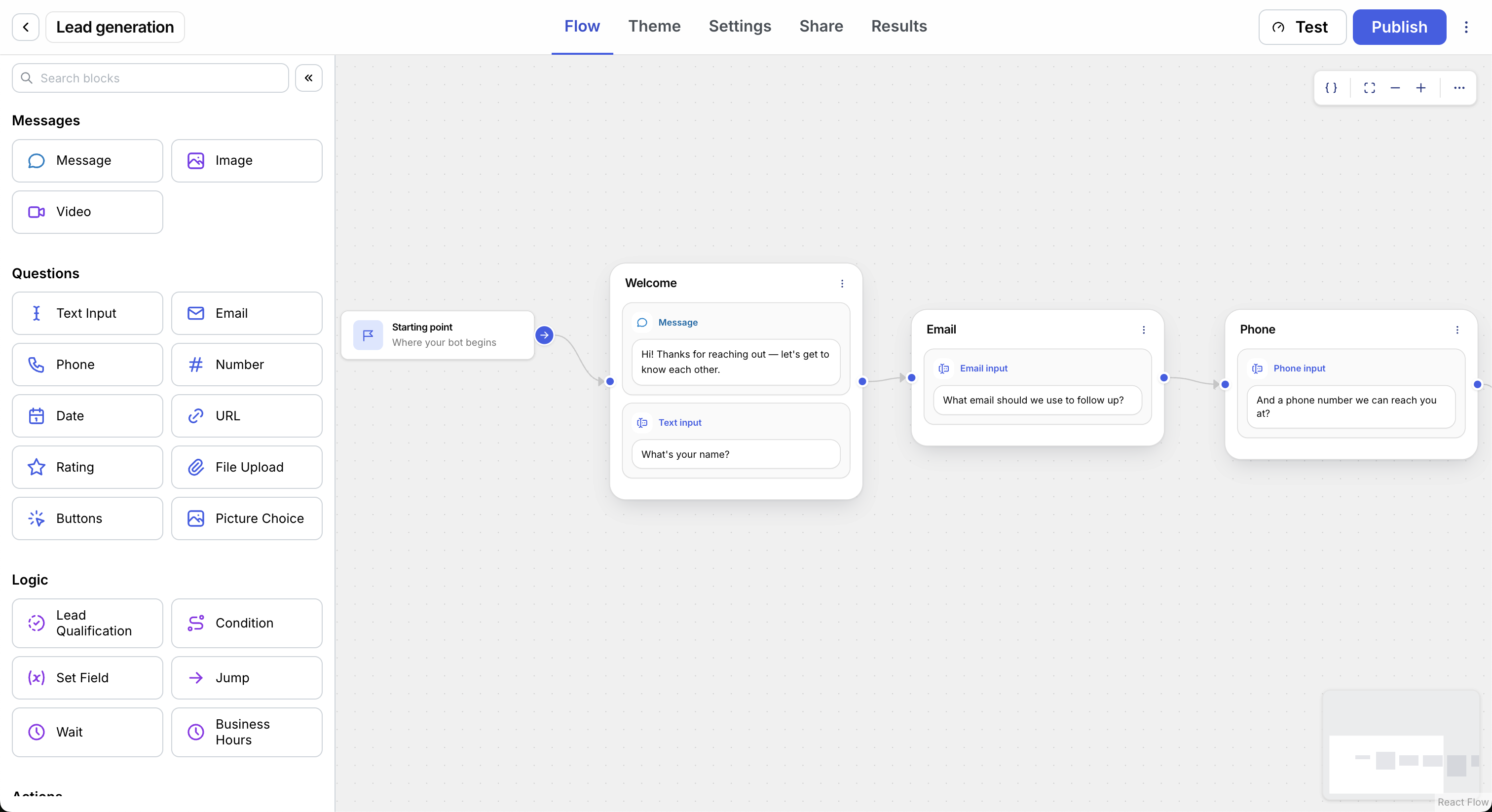
DialogMaker guided website intake
Website intake results view
Submission summary
Answer columns from the submitted website intake
Customize the template for your agency
Keep the core intake structure, then swap in the paths that match your services, technical handoff requirements, and proposal workflow.
Match your offer
Add paths for redesigns, landing pages, ecommerce, SEO projects, accessibility work, migrations, or ongoing retainers.
Qualify the scope
Ask about audience, competitor examples, page count, content readiness, technical access, budget, and launch pressure before offering a call.
Route the next step
Send strong-fit projects to discovery and send smaller requests to a faster follow-up path.
Website design intake form basics
Should a web design intake form ask for budget?
Yes, but use ranges. A budget range helps an agency suggest a realistic scope without forcing the prospect to know the exact cost upfront.
Should it ask for the current website URL?
Yes. The current URL gives your team context on positioning, content, technical complexity, and what the client may mean by redesign.
How many questions should it have?
Start with 12-16 core questions. Add branching when a prospect selects a specific path, such as ecommerce, landing page, redesign, SEO, or migration work.
Is this different from a client intake form?
Yes. A general client intake form works across service businesses. A website design intake form focuses on audience, pages, competitors, brand direction, content, assets, integrations, technical access, and launch constraints.
Start with a guided website intake flow
Collect better web design project details, qualify fit earlier, and give your team enough audience, creative, technical, and commercial context to send a useful next step.
Use this template